



A Spud That Diseases Can Resist

Finding the perfect spud can be a challenge. Potato farmers deal with different diseases that can lead to a bad ‘starch’ to their harvest season and a ‘root’ awakening with ‘un-a-peeling’ taters.
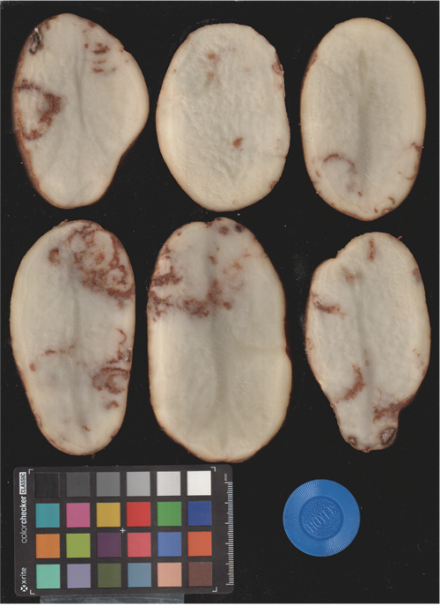
To help farmers continue growing the beloved food staple, ARS scientists explored how to breed potatoes resistant to two major diseases: Tobacco Rattle Virus (TRV) and Potato Mop-Top Virus (PMTV). Both viruses are naturally occurring in the soil and can cause internal brown streaks and other defects in potato tubers. These changes can reduce the visual ‘a-peel’ and tastiness of the spuds, leading to significant financial losses for farmers.
“Currently, there are not many tools to fight these viruses, except avoiding infected fields or using special chemicals (in the case of TRV),” said Max Feldman, a research geneticist at the ARS Temperate Tree Fruit and Vegetable Research Unit at the Prosser, WA, worksite.
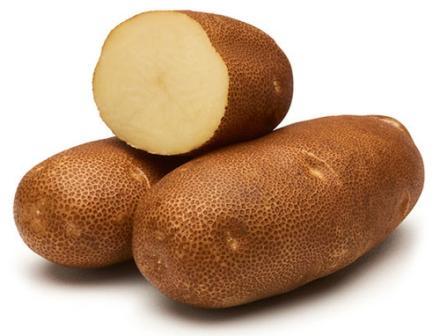
In a published study, researchers found that ‘Castle Russet,’ a medium-to-late maturing potato variety with excellent processing qualities due to its starch content and oblong-long shape, showed natural resistance to both diseases.
The study used a molecular mapping technique that identifies genetic markers associated with desirable traits, like disease resistance. The team crossed ‘Castle Russet’ with a susceptible variety to create a mapping population, a group of potato plants with varying resistance levels.
“These potatoes were grown in fields where the viruses and their vectors were present, and their tubers were tested for disease symptoms and viral infection,” said Feldman.
The genetic mapping identified markers on several chromosomes linked to PMTV resistance, suggesting multiple genes are involved. For TRV, a strong link was found on a single chromosome, indicating one major gene plays a key role in enhancing resistance.
“These findings are valuable for potato breeders, as they provide tools (molecular markers) to select for disease resistance more efficiently, helping to develop new potato varieties that are less susceptible to these damaging viruses,” said Feldman.
The research was led by retired ARS scientists Noelle Anglin and Rich Novy from the ARS Small Grains and Potato Germplasm Research Unit in Aberdeen, ID, and was conducted in collaboration with university researchers.
This impactful study received the 2025 Outstanding Paper Award in Breeding and Genetics category from the American Journal of Potato Research. – by Aileen Hendratna, ARS Pacific West Area, and Jessica Ryan, ARS Office of Communications