





ARS researchers are exploring ways to make battered catfish that’s tasty, crispy, and more appealing.
Tellus Articles

insectsplantsproduct innovation and quality
ARS scientists play an essential role in bringing products to your grocery store shelves.
Jul 01, 2019

human nutrition
ARS study reveals vitamin E can be successfully added to frying oil and fried foods, like tortilla chips.
Jun 24, 2019

insects
Scientists with the USDA are studying ways to keep honeybees stress-free and healthy.
Jun 17, 2019
product innovation and quality
ARS scientists have a new job for lactic acid bacteria: turning sucrose into a sugar called isomelezitose.
Jun 10, 2019

animalsnatural resources
Two scientists are honored for outstanding scientific achievements in animal health and remote sensing.
Jun 04, 2019

general
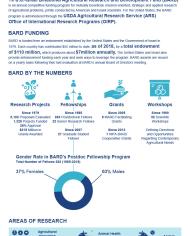
BARD provides ARS scientists opportunities for collaborative research with an Israeli counterpart.
Jun 03, 2019

insectsplants
The seeds of a purple-flowered annual known as cuphea could be the source of another insect repellent.
May 28, 2019
general
U.S.-Israel Binational Agricultural Research And Development Fund
May 28, 2019

insects
In ARS laboratory studies essential oils in Italian honeysuckle killed 100 percent of mosquito larvae.
May 20, 2019

general
Images from the ARS Electron and Confocal Microscopy Unit have scientific photography awards.
May 13, 2019
food safety
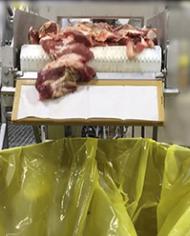
ARS scientists have developed new methods to test beef for the presence of harmful pathogens.
May 06, 2019

human nutrition
USDA researchers have developed a low-glycemic sweetener, a benefit for diabetics and crop farmers.
Apr 29, 2019

food safety
It is a question anyone who has ever eaten or cooked an egg might want to ask: How should we store them?
Apr 23, 2019


food safety
A test kit developed by ARS can help protect food from mycotoxins.
Apr 15, 2019

general
Three Scientists Are Being Honored For Their Achievements In Pioneering And Impactful Research.
Apr 10, 2019
general
ARS honors top researchers for their scientific contributions and achievements.
Apr 09, 2019
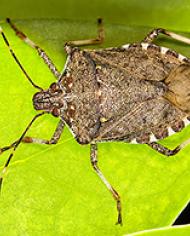
insects
An ARS entomologist is focused on finding natural ways to control stink bugs.
Apr 08, 2019

insects
The emerald ash borer is destroying ash trees, which are used to make baseball bats.
Apr 01, 2019

general
A massive collection of scientific cultures is part of the USDA's Agricultural Research Service.
Mar 27, 2019

general
The ARS Culture Collection safeguards important microbial resources from around the world.
Mar 26, 2019

product innovation and quality
ARS scientists developed a nonwoven cotton gauze that quickly stanches bleeding and promotes healing.
Mar 18, 2019

plants
Growing companion plants with crops creates a “push-pull” effect on pests.
Mar 11, 2019

plants
ARS researchers play a role in enhancing the quality of the hops and barley needed to produce beer.
Mar 06, 2019

plants
Each year, ARS researchers evaluate about 6,000 samples of malting barley.
Mar 06, 2019

plants
ARS scientists are using drones to sample irrigation ponds for E. coli.
Feb 25, 2019

insects
There’s surprising news about a pest that’s the main culprit in global honey bee colony losses.
Feb 19, 2019
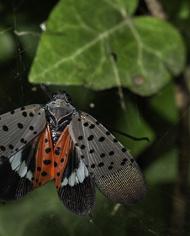
insects
The spotted lanternfly, first sighted in Pennsylvania, is an invasive pest to the United States.
Feb 11, 2019

general
Dr. Chavonda Jacobs-Young, Administrator of the USDA's Agricultural Research Service, introduces a new platform, Tellus, for sharing ARS success stories and more.
Feb 11, 2019

plants
A 1925 film of USDA plant explorers David Fairchild and Palemon Dorsett's collecting trip has been found.
Feb 10, 2019

plants
Clip taken from the 1925 silent film “Agricultural Explorations in Ceylon, Sumatra and Java.”
Feb 09, 2019

product innovation and quality
ARS continues to deliver scientific solutions to national and global agricultural challenges.
Feb 08, 2019

human nutrition
ARS research shows tree nuts provide fewer calories than shown on labels.
Feb 07, 2019

plants
For groundbreaking work on addressing feeding the world in the face of global climate change.
Feb 07, 2019